Context of the News
Debate over Facial Recognition Technology (FRT) and surveillance evasion has intensified following suggestions that creative makeup could interfere with facial recognition cameras during protests.
The issue raises important questions about the balance between law enforcement, technological innovation, the right to privacy and freedom of peaceful assembly.
What Is Facial Recognition Technology?
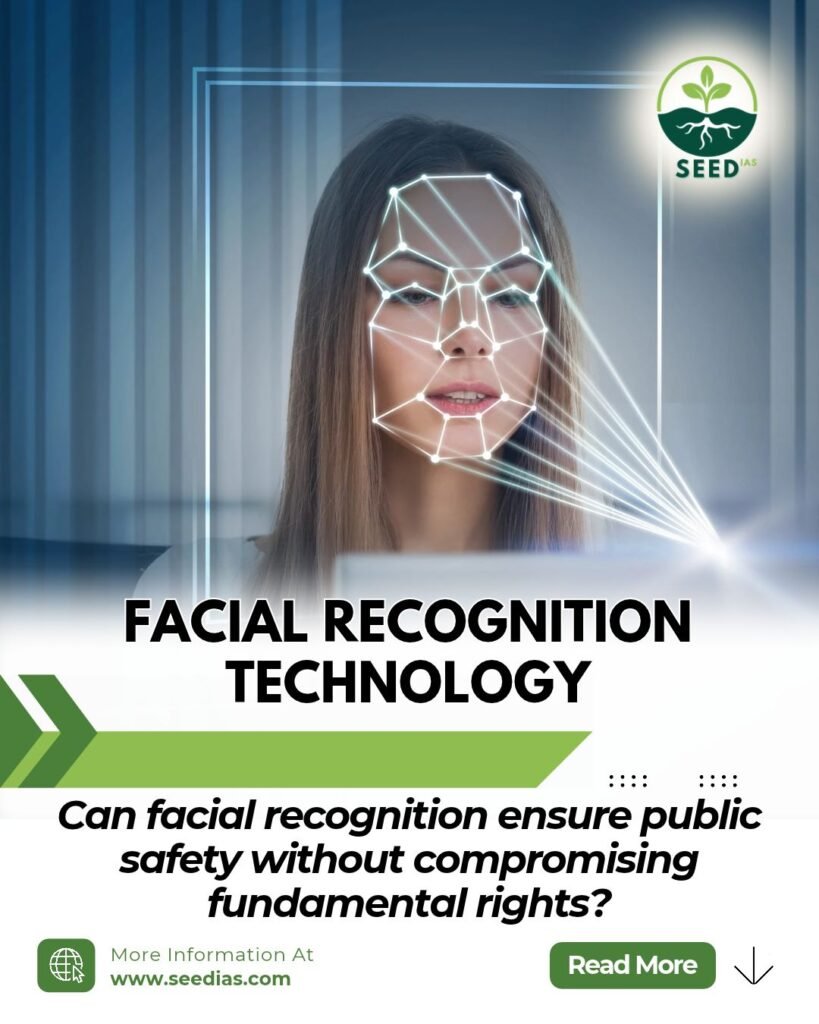
Facial Recognition Technology (FRT) is a biometric system that identifies or verifies individuals by analysing distinctive facial features in digital images or video.
Modern FRT systems use Artificial Intelligence (AI) and machine-learning algorithms to extract facial patterns and convert them into a numerical representation called a face embedding or facial template.
The system compares this representation with stored facial data and calculates a similarity score to determine whether a possible match exists.
Major applications of FRT
| Feature | 1:1 Verification | 1:N Identification |
| Purpose | Verifies a claimed identity | Searches for an identity among multiple records |
| Comparison | One facial sample against one reference | One facial sample against a database |
| Example | Smartphone unlocking and airport identity verification | Searching CCTV footage against a criminal database |
| Key concern | Incorrect verification | False identification and mass surveillance |
Accuracy limitation: A positive match is not conclusive proof of identity. Matching thresholds, image quality, lighting and algorithmic performance can influence results. Independent verification is essential before consequential action is taken.
Can Makeup Evade Facial Recognition?
Researchers and artists have explored whether changing the visual patterns of a face can interfere with automated recognition systems. These experiments illustrate potential weaknesses in computer-vision algorithms.
CV Dazzle Project
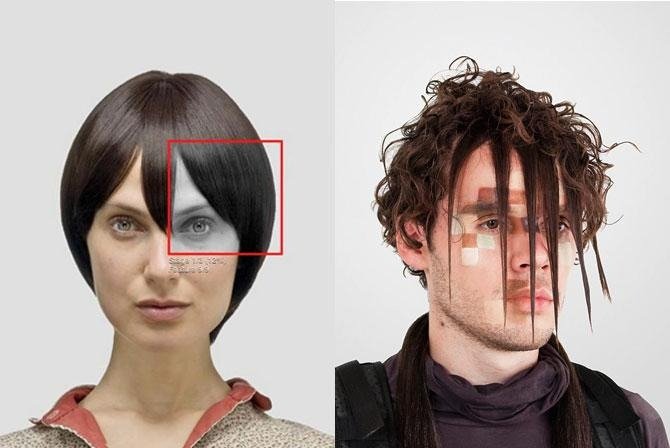

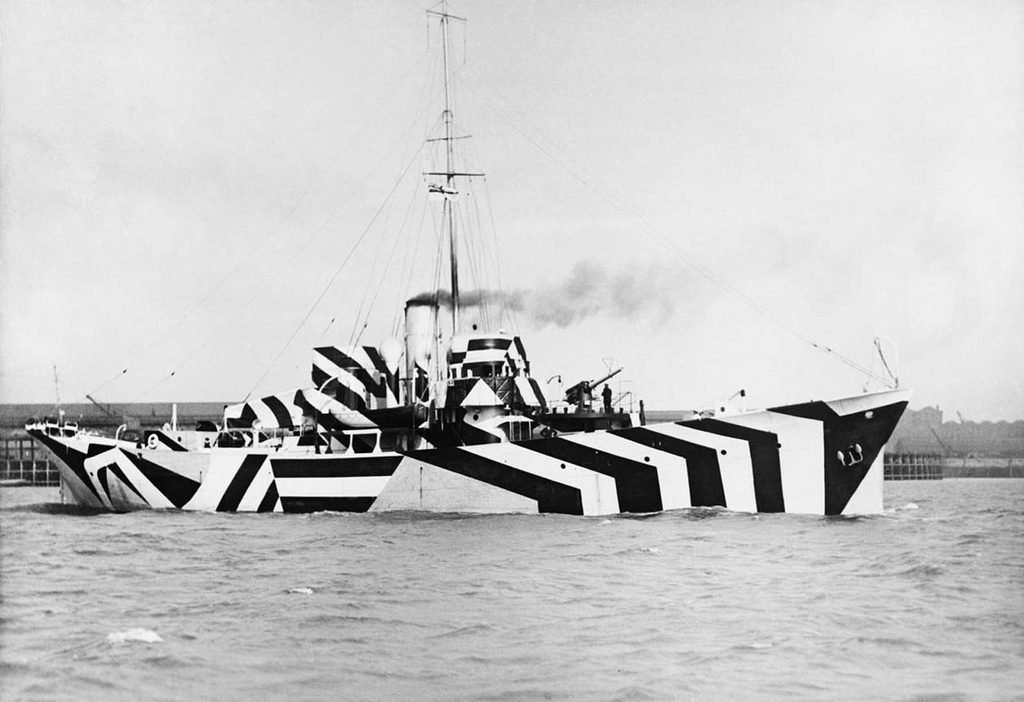
The CV Dazzle Project, developed by artist Adam Harvey in 2010, explored the use of high-contrast makeup, unusual facial patterns and asymmetrical hairstyles to disrupt computer-vision systems.
The project drew inspiration from First World War naval dazzle camouflage.
- Traditional camouflage attempts to conceal an object by blending it into its surroundings.
- Dazzle camouflage used bold geometric patterns to make a ship’s shape, orientation or movement harder for an observer to interpret.
Similarly, CV Dazzle explored whether changing the visual patterns analysed by facial recognition systems could interfere with facial detection.
Scientific Research on Adversarial Makeup
A 2021 study associated with Ben-Gurion University examined machine-learning-generated makeup patterns designed to interfere with facial recognition algorithms.
The supplied source reports evasion success of up to 98% under experimental conditions.
This figure should not be interpreted as a universal success rate against all modern FRT systems. Results depend on the algorithm, dataset, lighting, camera conditions and experimental design.
The broader concept is known as an adversarial attack, in which carefully designed inputs cause an AI system to produce an incorrect or unreliable result.
Judicial and Constitutional Framework
K.S. Puttaswamy Judgment, 2017
In Justice K.S. Puttaswamy (Retd.) v. Union of India (2017), a nine-judge Bench of the Supreme Court unanimously recognised the right to privacy as a fundamental right, protected under Article 21 and the broader guarantees of Part III of the Constitution.
The judgment established the importance of proportionality when assessing state action that restricts privacy.
Proportionality requires the state to justify an intrusion through a lawful basis, a legitimate objective and a proportionate relationship between the measure adopted and its intended purpose.
For FRT deployment, this raises several questions:
- Is there a clear legal basis for using the technology?
- Does its deployment serve a legitimate public purpose?
- Is the extent of surveillance necessary to achieve that purpose?
- Could a less intrusive method achieve the same objective?
- Are safeguards available against misuse, wrongful identification and excessive data retention?
Facial Recognition During Protests
The use of FRT during demonstrations has become a subject of legal scrutiny. In August 2026, the Delhi Police told the Supreme Court that its system had been used to identify people with previous criminal records during student protests and denied that it was intended for indiscriminate surveillance. These are the police’s claims in legal proceedings, not a blanket judicial approval of FRT deployment.
The constitutional challenge is to distinguish targeted, lawful investigation from broad monitoring that could discourage people from participating in peaceful protests.
Key Concerns Surrounding FRT in India
Lack of a Dedicated Regulatory Framework
The Digital Personal Data Protection (DPDP) Act, 2023 establishes a framework for processing digital personal data. However, India continues to face concerns about the absence of a dedicated statutory framework setting out detailed safeguards for police use of FRT, including watchlist management, accuracy thresholds, retention periods and independent audits.
The DPDP Act has a phased commencement framework, so its provisions should not be assumed to be fully operational at the same time. Its interaction with government exemptions and other applicable laws also matters.
Algorithmic Bias and False Positives
A false positive occurs when a system incorrectly identifies two different people as a match.
FRT systems can have different error rates across demographic groups and operating conditions. Depending on the system, disparities may affect people based on skin tone, race or gender.
Possible consequences include:
- Wrongful suspicion, questioning or arrest.
- Disproportionate impact on marginalised communities.
- Reduced public trust in law enforcement.
- Automated matches being mistaken for conclusive evidence.
Way forward: Systems should undergo independent accuracy testing, demographic bias assessments and regular audits. Human verification must precede consequential decisions.
Chilling Effect on Peaceful Assembly
Article 19(1)(b) guarantees citizens the right to assemble peaceably and without arms, subject to reasonable restrictions under Article 19(3). Article 19(1)(a) protects freedom of speech and expression, subject to constitutionally permitted restrictions.
The possibility of being identified, profiled or added to a surveillance database may discourage people from attending lawful demonstrations.
This is known as a chilling effect: fear of surveillance or potential consequences can deter people from exercising their rights, even when they have done nothing unlawful.
Function Creep and Data Misuse
Function creep occurs when data collected for one purpose is gradually used for other purposes without adequate justification or safeguards.
For example, a facial recognition system introduced to identify suspects in serious crimes could raise concerns if subsequently used to monitor peaceful gatherings without a clear legal basis.
Other risks include unauthorised access to biometric databases, indefinite retention, inadequate security and sharing information beyond its original purpose.
Way Forward: Responsible and Rights-Based FRT
- Establish clear legal safeguards: Define permissible purposes, conditions for deployment, watchlist inclusion, data retention and deletion.
- Apply proportionality: Ensure that surveillance is lawful, necessary and proportionate to a legitimate objective.
- Mandate independent audits: Assess accuracy, demographic disparities, cybersecurity and compliance with legal requirements.
- Ensure human oversight: Treat algorithmic matches as investigative leads rather than standalone grounds for arrest.
- Strengthen transparency: Maintain deployment records and establish independent oversight and accessible complaint mechanisms.
- Protect personal data: Minimise collection, restrict access and prevent unauthorised sharing or indefinite storage.
- Safeguard peaceful assembly: Prevent unnecessary mass monitoring of people exercising their constitutional rights.
The goal should be to promote responsible innovation, allowing technology to support public safety without undermining privacy, equality and democratic participation.
Conclusion / Way Forward for Mains
India must establish a rights-based framework for facial recognition that combines effective policing with proportionality, independent oversight, algorithmic accountability and protection of fundamental freedoms.
Prelims Check
Question: Consider the following statements about Facial Recognition Technology (FRT):
- One-to-one verification checks a facial sample against a reference associated with a claimed identity.
- One-to-many identification may involve searching a facial sample against a database of stored identities.
- A high similarity score alone constitutes conclusive proof of identity.
Which of the statements given above are correct?
A. 1 and 2 only B. 2 and 3 only C. 1 and 3 only D. 1, 2 and 3
Question: Consider the following pairs:
| Concept | Description |
| 1. CV Dazzle | Exploration of techniques to interfere with computer-vision systems |
| 2. False positive | Failure to identify a genuine match |
| 3. Adversarial attack | Input designed to cause an AI system to make an error |
| 4. Function creep | Expansion of data use beyond its original purpose |
How many of the pairs given above are correctly matched?
A. Only one B. Only two C. Only three D. All four
Question: With reference to the constitutional and legal dimensions of FRT in India, consider the following statements:
- The K.S. Puttaswamy judgment recognised privacy as a fundamental right.
- The proportionality principle requires state action affecting privacy to be appropriately justified.
- Article 19(1)(b) protects the right of citizens to assemble peaceably and without arms, subject to constitutionally permitted restrictions.
- The DPDP Act, 2023, is a dedicated law exclusively governing police deployment of facial recognition technology.
Which of the statements given above are correct?
A. 1 and 2 only B. 1, 2 and 3 only C. 2, 3 and 4 only D. 1, 2, 3 and 4
Answers and Explanations
Correct answer: A — 1 and 2 only
- Statement 1 is correct: One-to-one verification compares a facial sample with a reference linked to a claimed identity.
- Statement 2 is correct: One-to-many identification searches across multiple stored records to find possible matches.
- Statement 3 is incorrect: Similarity scores indicate possible matches, not conclusive proof. Independent verification is essential before consequential action.
Correct answer: C — Only three
- Pair 1 is correct: CV Dazzle explored ways of disrupting computer-vision systems.
- Pair 2 is incorrect: A false positive is an incorrect match between different people. Failure to detect a genuine match is a false negative.
- Pairs 3 and 4 are correct: Adversarial attacks exploit weaknesses in AI systems, while function creep involves extending data use beyond its original purpose.
Correct answer: B — 1, 2 and 3 only
- Statement 1 is correct: The Supreme Court recognised privacy as a fundamental right in the 2017 Puttaswamy judgment.
- Statement 2 is correct: Proportionality requires state interference with privacy to be justified and appropriately related to a legitimate objective.
- Statement 3 is correct: Article 19(1)(b) protects peaceful assembly, subject to reasonable restrictions under Article 19(3).
- Statement 4 is incorrect: The DPDP Act establishes a broader digital personal data protection framework; it is not exclusively a law regulating police FRT deployment.
“The price of greatness is responsibility.” — Winston Churchill